SHANGHAI, October 15, 2026 — A delegation of Emirati AI experts from the Artificial Intelligence Track of the UAE National Experts Program (NEP-AI) met with enterprise AGI company AHS in Shanghai on October 15, day four of a five-day study tour of China's AI ecosystem.
The delegation is in China from October 12 to 16, meeting AI research institutions and six representative AI companies in Beijing and Shanghai. The visit explores how advanced technologies can be aligned with the UAE's own development priorities — building intelligent capabilities that can be continuously deployed, managed and evolved.
The Shanghai session focused on a question at the center of current international AI cooperation: as AI systems move beyond answering questions to planning tasks, calling tools and executing coordinated work, how can their capabilities be embedded in factory production scheduling, enterprise supply chain management and urban public services — while adapting to local business rules and governance requirements.
What It Takes for AI to Enter the Enterprise
Discussions centered on secure and controllable sovereign AI for the enterprise and AI-driven urban operations, examining how intelligent technologies can be translated into practical capabilities that support industrial development and organizational operations. Representatives from three universities — New York University Abu Dhabi, the Hong Kong University of Science and Technology (Guangzhou) and Nanjing University — joined the session.
At the event, Cao Likun, Chief Growth Officer of AHS, noted that the global AI industry is taking shape along four coordinated fronts: infrastructure, frontier R&D, talent development and application deployment. As cooperation between government agencies and enterprises deepens, he said, engineering practice and local capability building are gaining a clearly defined role in converting technological breakthroughs into economic and social value.
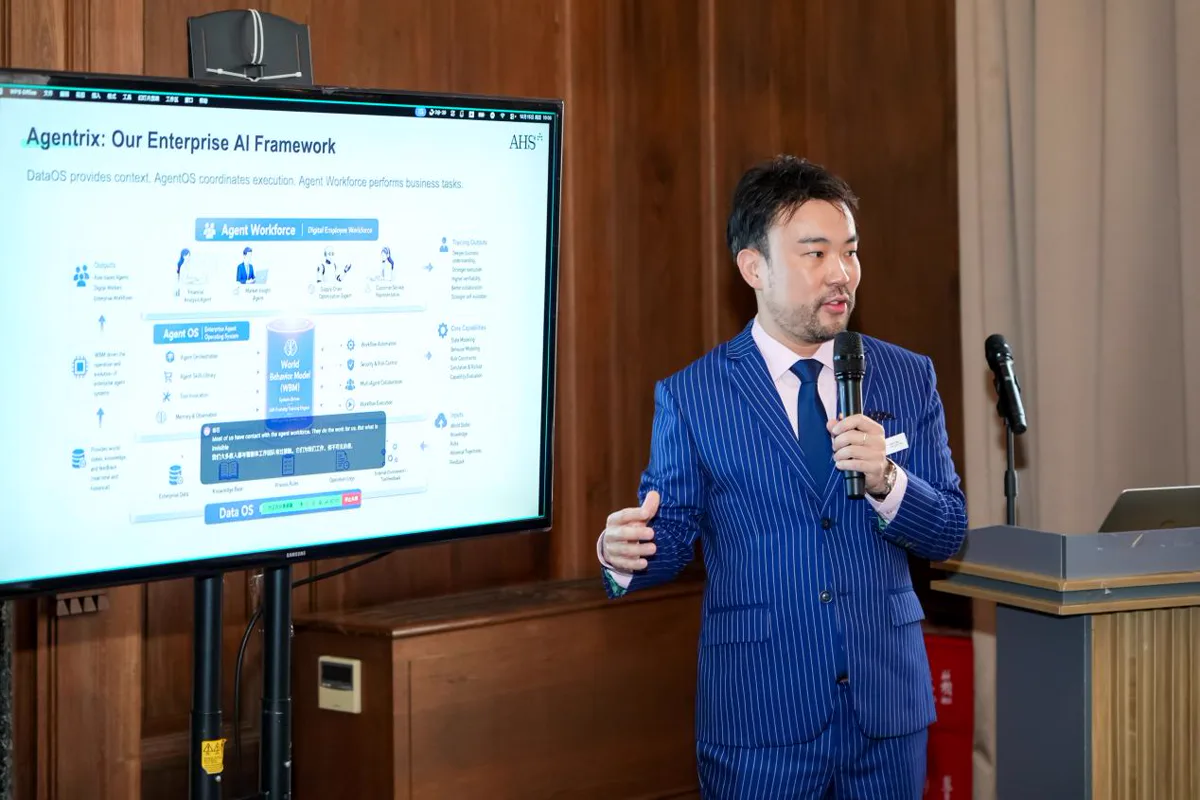
Cao argued that enterprises are the fundamental unit where industrial capability and socioeconomic value take shape. For AI to operate inside a company, he noted, it must understand business objectives, business entities and their relationships — and work within the organization's operating rules and boundaries of accountability. Whether an AI system can coordinate its actions under those constraints, he argued, determines whether it can integrate into real business operations and create tangible value.
He also addressed how organizations accumulate intelligence over time. Business knowledge, operating rules and work experience scattered across roles and systems, he said, must go through unified modeling, permission management and business validation before an organization can invoke and reuse them as intelligent capabilities at scale.
Putting 'Secure and Controllable' AI into Practice
AHS outlined the development path behind Agentrix, its enterprise AI operating system, and demonstrated two of its latest engineering-grade systems: SovEngine, a sovereign AI office assistant built for specific enterprise roles, and Super BI, an intelligent business analysis and decision-support system for enterprise decision-makers.
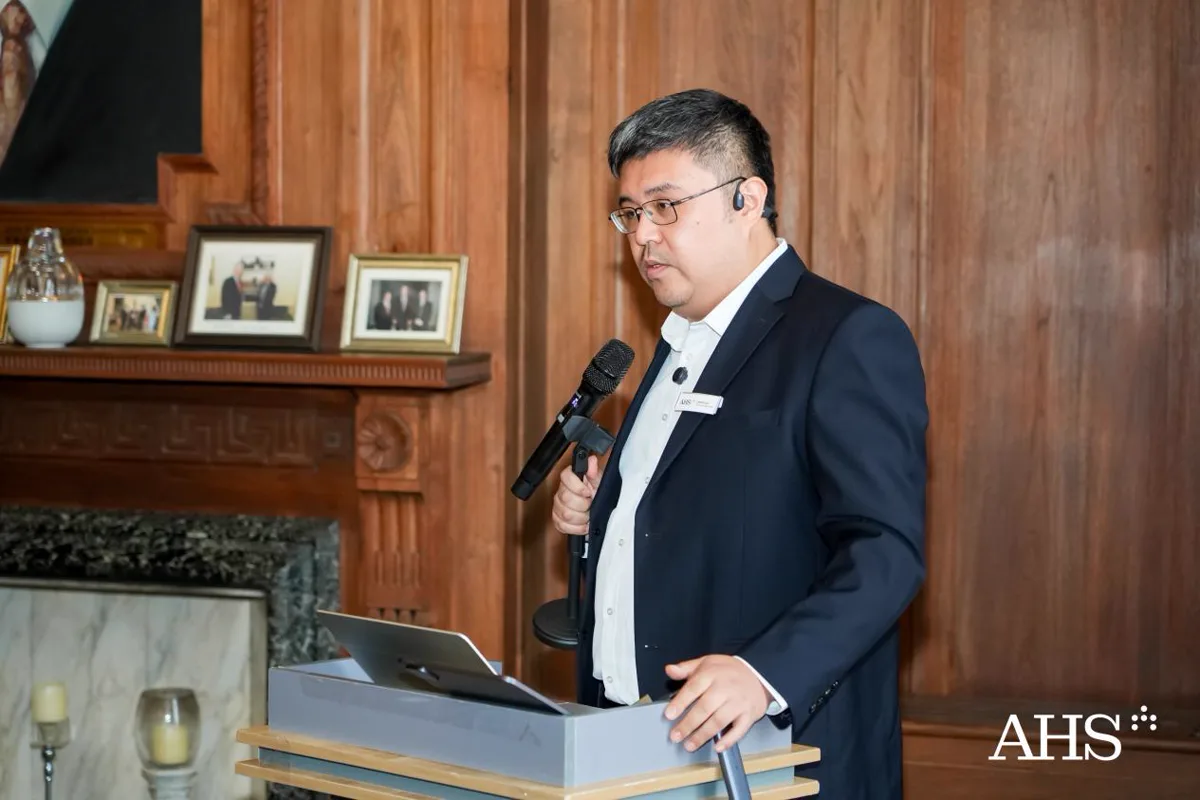
From organizational collaboration to business decision-making, the demonstrations showed how the company's "secure and controllable" approach to AI plays out in practice across organizational intelligence.