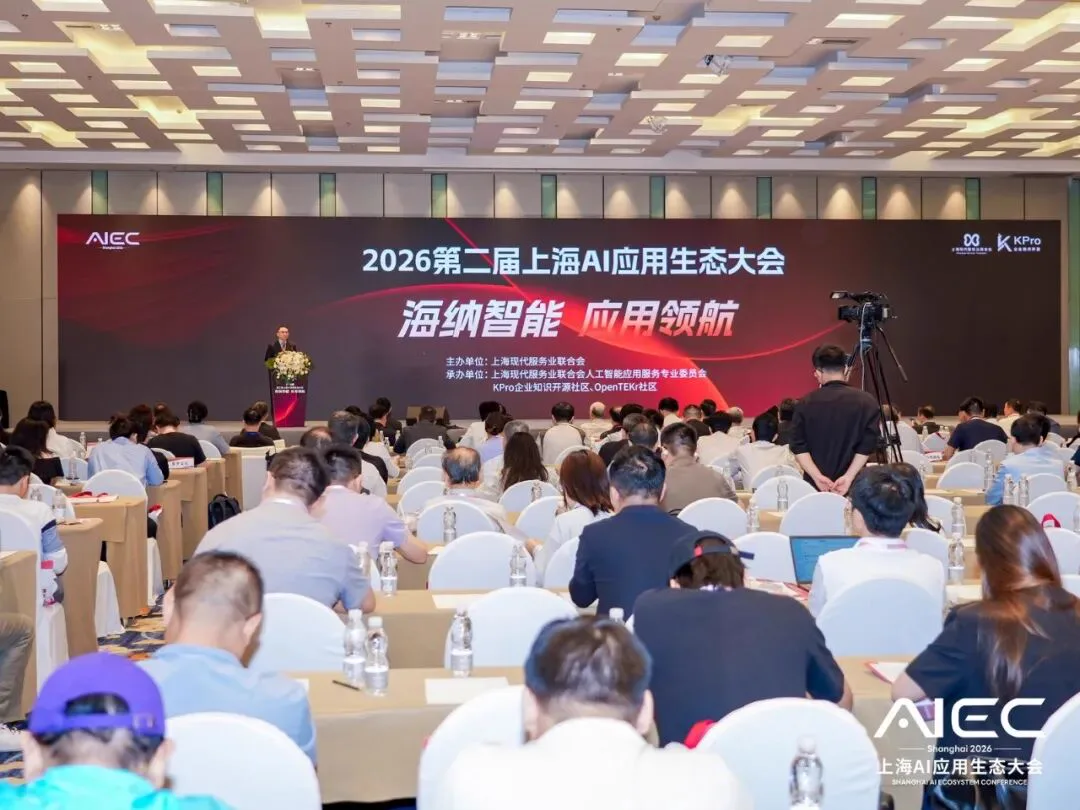
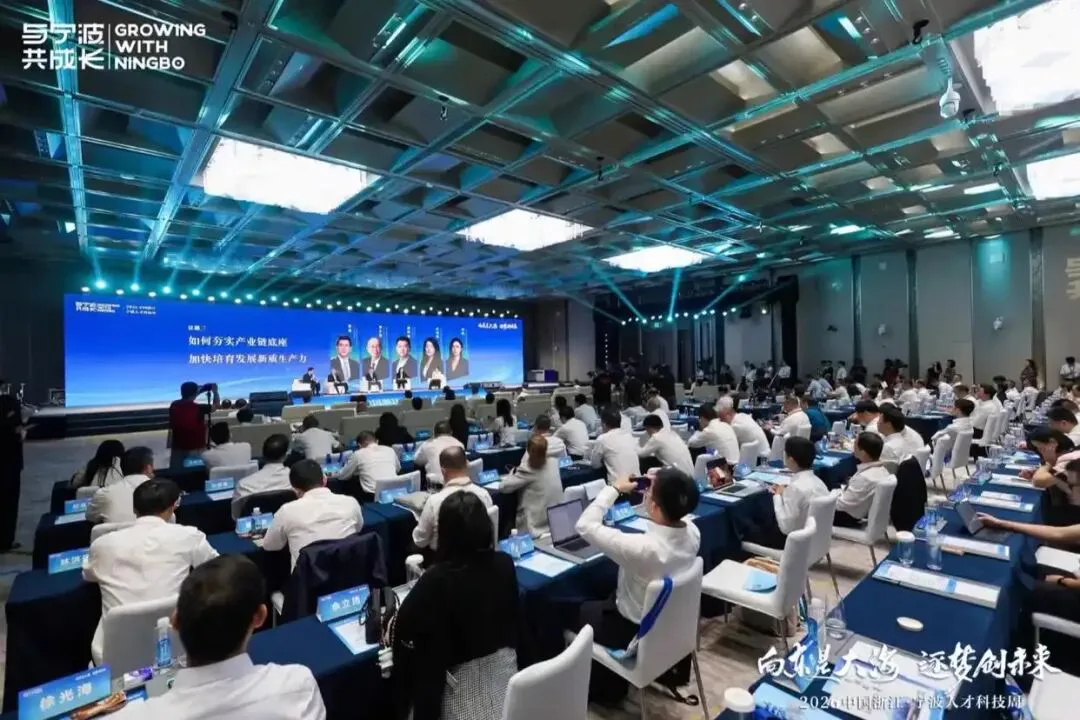
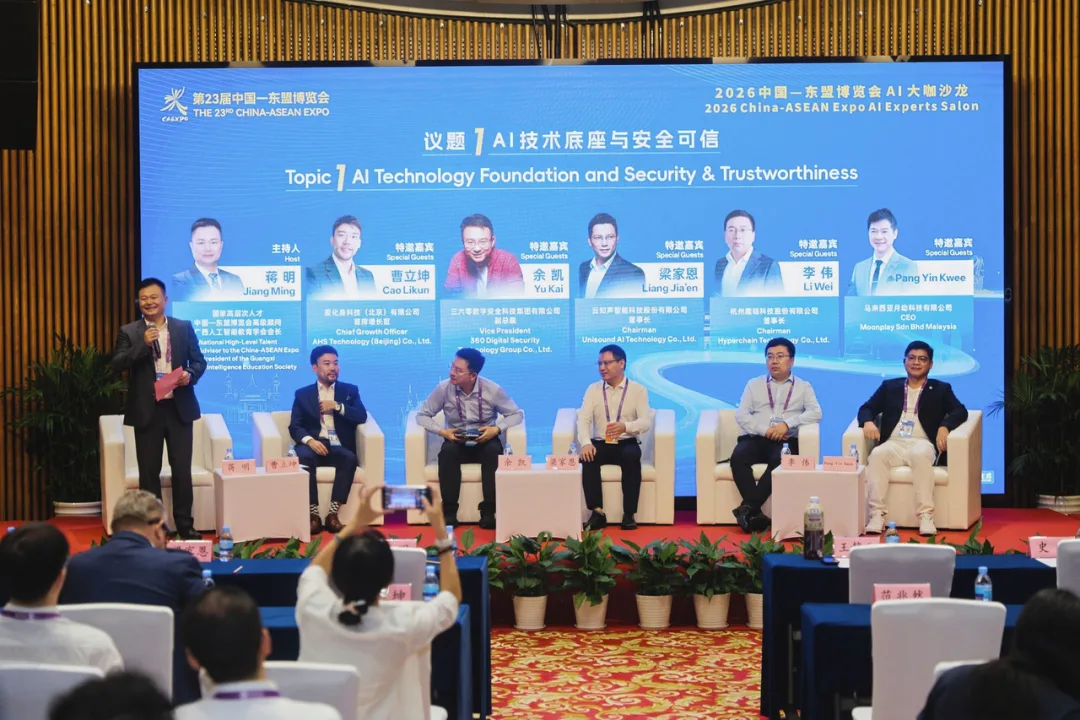
On August 7, at the Greater Bay Area edition of the DAMA Data Management Frontier Salon in Shenzhen, AHS sharpened its view of enterprise AI transformation: the focus is shifting from buying foundation models and building isolated AI applications to creating an intelligent production system in which data, business rules, agents and digital workers operate together and continuously evolve.
For enterprises, this determines whether AI can move from understanding and answering to judging and acting. For the industry, it offers a new path for turning data assets into intelligent productivity.
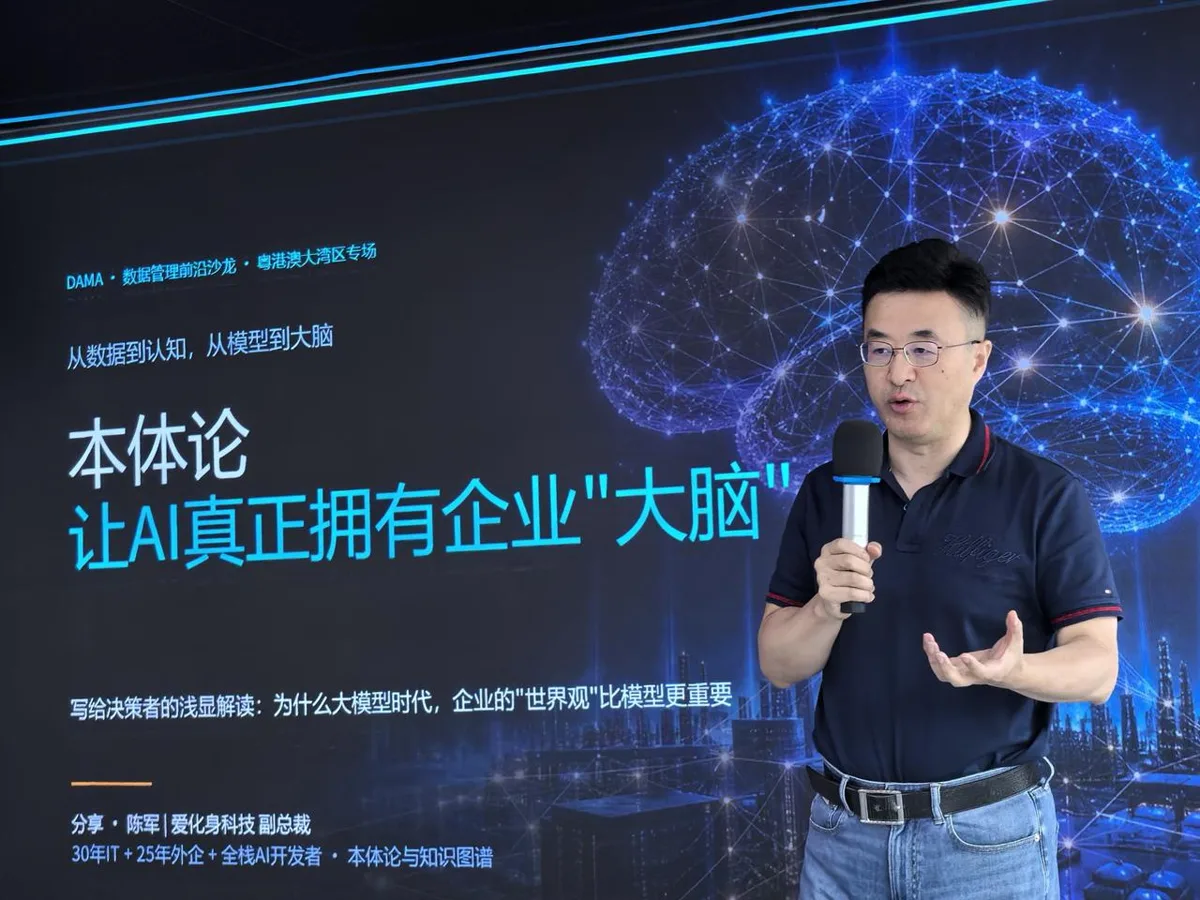
The salon covered ontology and its applications, high-quality datasets, data supply and circulation, data assets in Hong Kong and DCMM 2025. Speakers included AHS Vice President Chen Jun, Xu Yuguang of the Data Security Committee, Luo Xin of the International Digital Intelligence Association's Data Circulation Committee, Bai Dalong of ShineWing and DAMA China Chair Ma Huan.

Enterprise AI needs its own business world
Drawing on cognitive science, Chen Jun explained how ontology can support enterprise data management and knowledge graphs. A live demonstration showed how ontology connects data relationships with business scenarios.
As foundation models, computing power and agent development platforms become widely available, enterprises and their competitors can obtain increasingly similar tools. What remains difficult to copy is the business vocabulary, object relationships, process rules, expert knowledge and collaborative practices accumulated over years of operation.
Yet these valuable capabilities are often scattered across ERP, CRM and MES systems and frontline experience. The same customer, order or device may be defined differently across departments; key rules may never be expressed systematically. AI can offer plausible advice without understanding access boundaries, approval paths or execution conditions—and cannot reliably turn that advice into business action.
Chen said enterprise ontology addresses precisely how AI understands an enterprise. It turns customer, order and equipment data into explicit business objects, then organizes their relationships, real-time states and rules. AI can identify change, assess impact and act within constraints. Data is no longer merely queried or displayed; it becomes an operating factor in decisions and execution.
Understanding data and business is only the first step. To affect operations, that understanding must become business capability that can be orchestrated, executed and improved through feedback.
In AHS's technology stack, the spatiotemporal ontology gives AI an understandable business world, while the AHS Agentrix enterprise AI operating system coordinates agent collaboration and execution. Built on the World Behavior Model (WBM), its Data OS, Agent OS and Agent Workforce layers connect enterprise data, agent collaboration and digital-worker teams into a closed loop from understanding to execution, feedback and continuous evolution.
From internal semantics to a new coordinate for data circulation
Luo Xin, who chairs the Data Circulation Committee of the International Digital Intelligence Association, extended the discussion from enterprise ontology and AI operating systems to the broader circulation of data elements. He examined data products and trading markets, including how internal governance can expand into cross-system and cross-organization data circulation and value creation.
Xu Yuguang's session on building and evaluating high-quality datasets addressed another boundary of enterprise intelligence: once AI enters business processes, trusted data, clear permissions and traceable actions directly determine whether enterprises can truly use it.
This industry perspective resonates with AHS's technology path. AHS is not building an agent platform that only generates answers, but an AI operating system for real enterprise environments. Agent OS brings multi-agent management, task orchestration, access governance, safety and compliance into one mechanism. Using WBM, it continuously records behavior, outcomes and feedback so that critical actions are grounded, bounded and reviewable.
This distinguishes AHS Agentrix from conventional enterprise intelligence infrastructure. Agents must not only be able to work; they must operate reliably within corporate rules, permissions and accountability. Data security is therefore not an add-on, but a foundation for bringing enterprise AI into core operations, supporting digital-worker teams and enabling continuous evolution.
The DAMA Shenzhen salon revealed an increasingly clear path from governance and accumulation to value creation across high-quality datasets, data-management maturity, assets and circulation. AHS's enterprise ontology practice extends that path all the way into business operations.