AI is rapidly moving from technological exploration to industrial application worldwide. Adapting it to different countries’ industries, business needs and governance systems has become a practical challenge. With diverse industries and substantial regional differences, ASEAN offers a representative setting for examining cross-border AI deployment and industrial collaboration.
On the morning of September 18, the 2026 China–ASEAN Expo AI Leaders Salon was held at Nanning International Convention Center. This major AI exchange within the Expo brought together industry experts, academics and business representatives from China and ASEAN countries under the theme ‘AI Foundations, Security and Trust: Building the Underlying Capabilities for China–ASEAN Digital Cooperation’ to explore new directions in technology and industrial partnership.
Held since 2004, the China–ASEAN Expo has become an important platform for trade, industrial cooperation and regional economic development. As cooperation expands into the digital economy, technological innovation and industrial collaboration, AI is becoming a key driver of regional industrial upgrading. The salon’s focus on foundational technology, security and trust addressed a central need for AI companies expanding internationally and industries adopting AI: building the data foundations, technical architecture and ecosystem cooperation needed for deployment at scale.
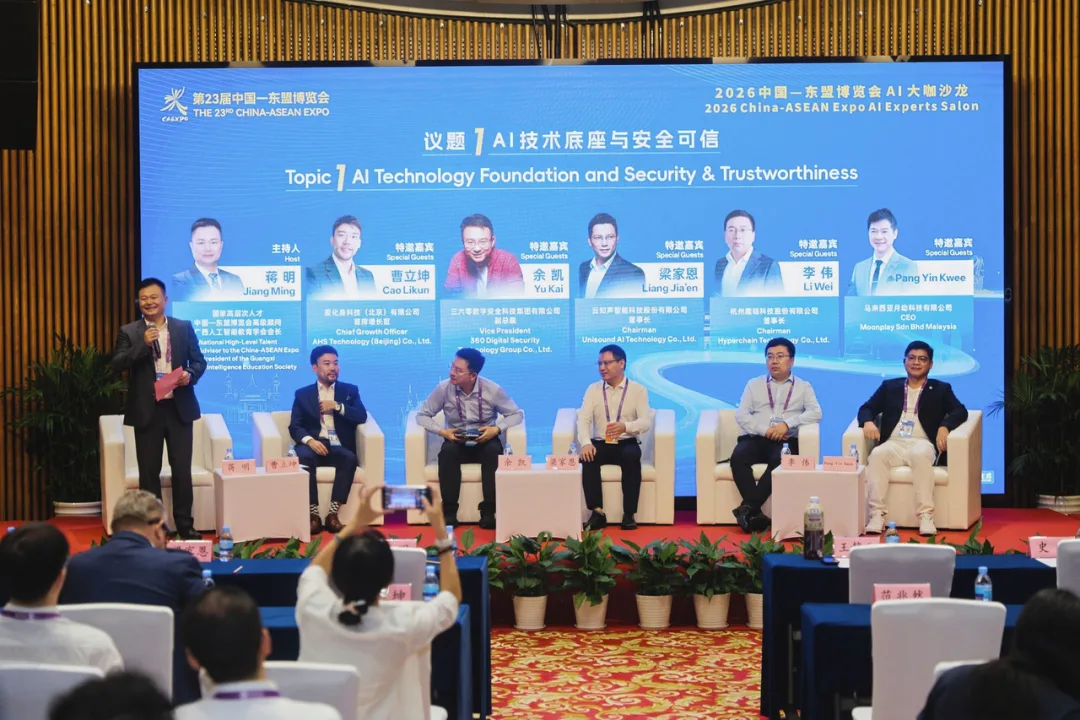
Participants covered the AI value chain from foundational technology to industrial applications. Unisound focused on intelligent interaction and large models; 360 on AI security; Hyperchain on trusted data infrastructure; Yuedong Technology on computing capacity in ASEAN; and AHS on enterprise AI operating systems, business understanding, intelligent decision-making and foundational enterprise AI capabilities.
AHS Chief Growth Officer Cao Likun shared perspectives on enterprise AI’s evolution, enterprise AI foundations and the path to global expansion. As AI enters core business processes, he said, it is evolving from an isolated technical capability into infrastructure for long-term growth. Enterprises need more than a tool that supplies answers: they need an intelligent partner that understands the business environment, connects resources and participates in operational collaboration.
To address complex business scenarios, AHS outlined its work with an ontology layer. Enterprises accumulate business objects, process rules and experiential knowledge over years of operation. Serving them effectively requires a structured understanding of their business world. Ontology connects data, knowledge and business logic, helping AI understand people, events, assets and their relationships. This takes AI beyond information processing toward business understanding, supporting more consistent decisions and collaboration in complex settings.
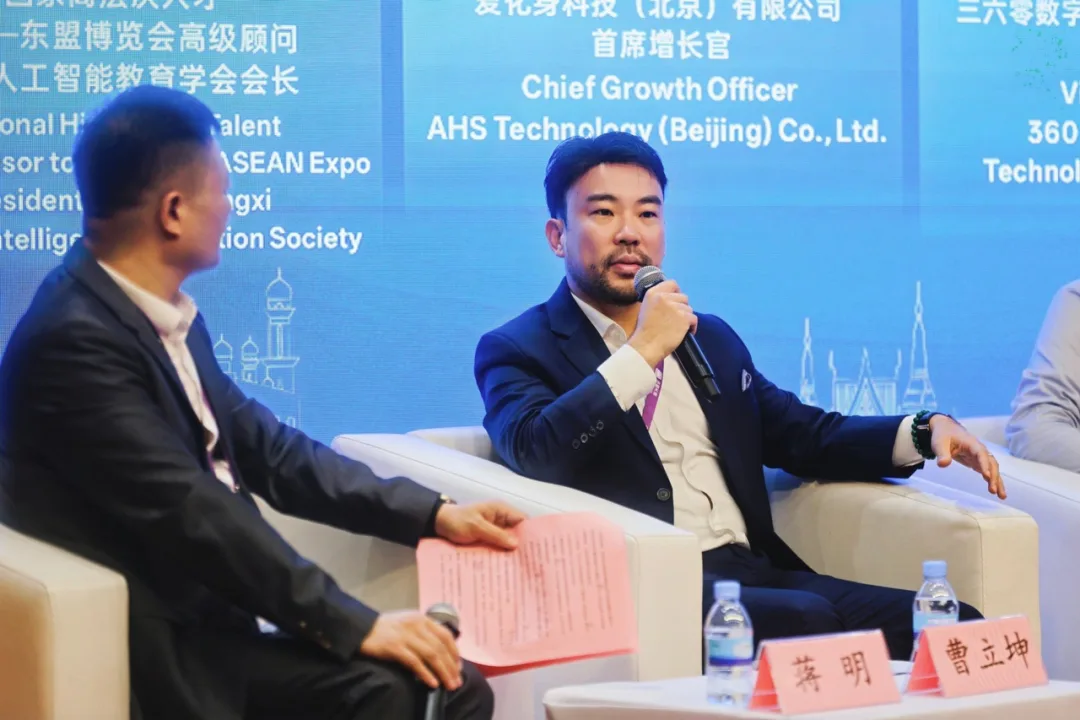
Drawing on enterprise experience, Cao Likun said, ‘Localization is not translation.’ For AI companies, localization means more than transferring technology: it means enabling AI to understand how a market works. Industries, regulation, commercial rules and organizational processes differ across countries and regions. Only by entering real business contexts and understanding local objects, relationships and operating logic can AI move from usable technology to productive participation in business.
Ecosystem cooperation is essential to that international expansion. One company’s technology alone cannot bring AI into an overseas market. Local enterprises, industry institutions and service partners must participate and build lasting connections with regional industries. Chinese AI companies are moving from exporting technology and products toward jointly developing capabilities around local needs. The Expo’s value therefore extends beyond exchange and demonstration: it connects Chinese technical capabilities with ASEAN industrial demand, creating opportunities for scenario-based cooperation, ecosystem development and regional collaboration.
Data security and trustworthy operation are also prerequisites for AI in core enterprise scenarios, making enterprise intelligence sovereignty an important direction. At its heart is an organization’s full control over its data, business semantics, rules, permissions and agent access. In core operations, decision grounds must be traceable, agent behavior explainable, execution paths trackable, critical changes recoverable and outcomes reproducible. These capabilities let enterprises realize AI’s value while developing and governing their intelligence systems securely and under their own control.
From localization and ecosystem cooperation to enterprise intelligence sovereignty, the questions surrounding AI’s entry into real industries are becoming more concrete. As China and ASEAN deepen cooperation in urban governance and the digital and intelligent economy, AI can help strengthen regional industrial collaboration, improve enterprise efficiency and unlock further growth.