The Guangzhou round of AHS’s CITY OS Product CEO Hackathon has concluded with a winning team.
Twenty-five teams registered. After four weeks of preliminary selection, online pitches, product verification and review, teams led by Li Yixuan and Wang Shengjie reached the final. Through nearly three hours of product pitches, live demonstrations and in-depth questioning, Li Yixuan’s team took first place in Guangzhou.
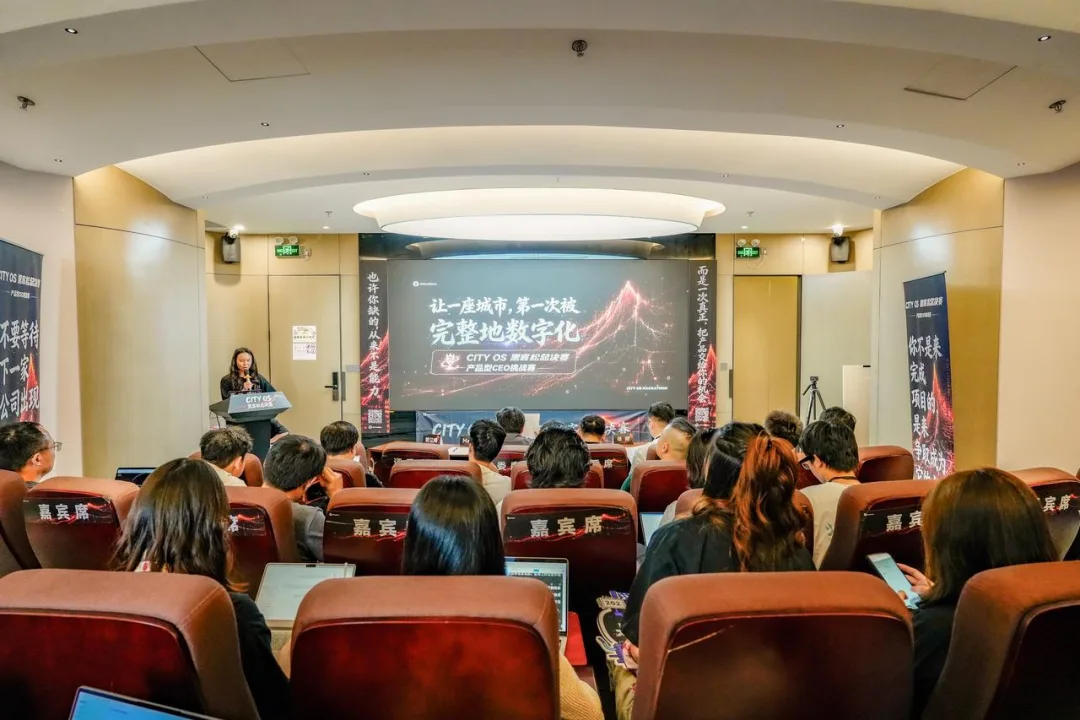
For CITY OS, Guangzhou provided a first round of answers.
As AI applications become easier to build quickly, the real challenge is changing: can a product move beyond a demo into a real city’s data, processes and constraints? Can AI go beyond reporting events to understand a city, predict change, simulate outcomes and participate in decisions and execution?
As urban AI progresses from visibility toward prediction, simulation, decisions and execution, competition is shifting from individual model capabilities toward product capabilities and their fit with the real world.
One team helps cities simulate; the other helps cities act
The two Guangzhou finalists had almost entirely different talent profiles, yet independently addressed the same question: how can AI genuinely participate in urban operations?
Li Yixuan’s winning team comprised four interdisciplinary young people aged 14 to 23, with backgrounds in mathematics, data science and marine science. Starting with urban natural disasters, they wanted their system to continually answer three questions: what is happening now, what might happen next, and what action should be taken now given those possibilities?
The team built three layers—Sense, World Model and Decision—to continuously incorporate real-time observations, infrastructure and other data into state simulations and compare the possible outcomes of different responses.
Accurate simulation depends on real operational data. A week before the final, Li Yixuan’s team visited Futian, Shenzhen, for field research. They found that public data could not fully describe a real city: beyond surface permeability, details such as manholes and drainage networks also affect disaster impacts. They therefore kept supplementing data and adjusting the model.
More importantly, they transferred the model structure from Shenzhen to Shanghai to test whether the approach could adapt to different cities.
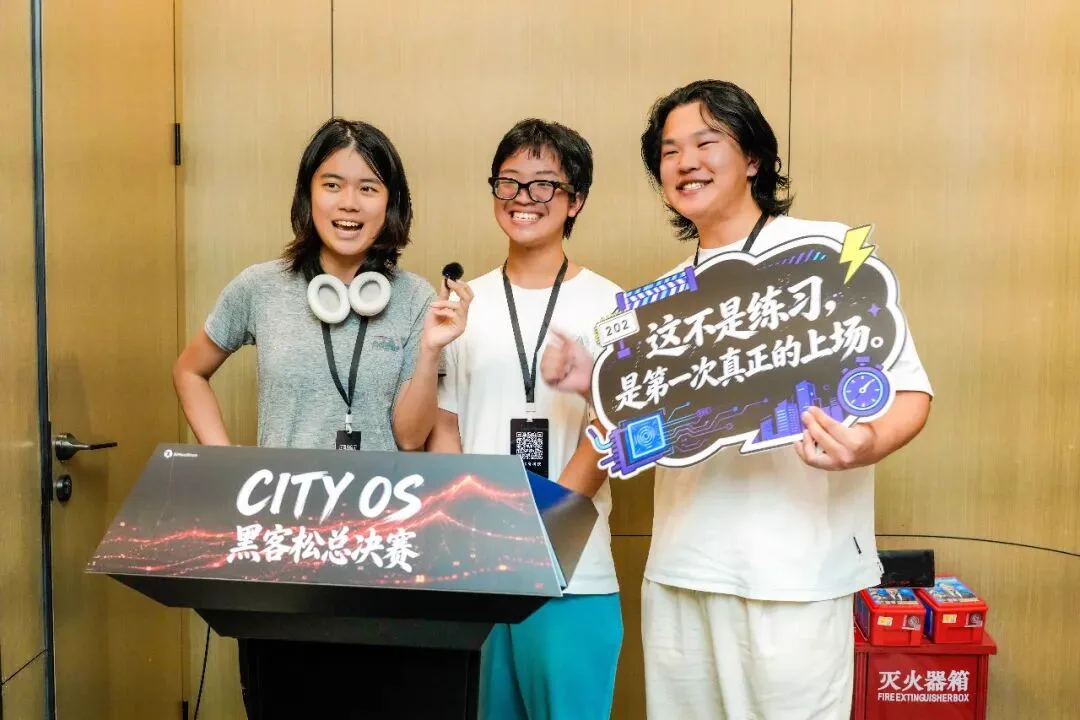
Wang Shengjie’s runner-up team approached the problem through action with City X, an Agent OS for urban spatial governance. Combining serial entrepreneurs, a technically trained product lead and a technology lead with more than 20 years of enterprise, government and smart-city experience, the team brought together commercial, product and complex-systems engineering capabilities.
The team aimed to move urban governance beyond visualization into real action. City X organizes facilities, areas, events, resources and responsible parties into computable urban objects, then uses Agents, Skills and Workflows to drive subsequent actions.
In a live electricity scenario, City X did more than display a map alert after abnormal substation load was detected. It linked power lines and nearby resources, proposed load transfers, dispatched work, planned repair routes and used geofencing to confirm personnel arrival. An issue moved from detection to active handling, with the entire response traceable through operation logs and model calls.
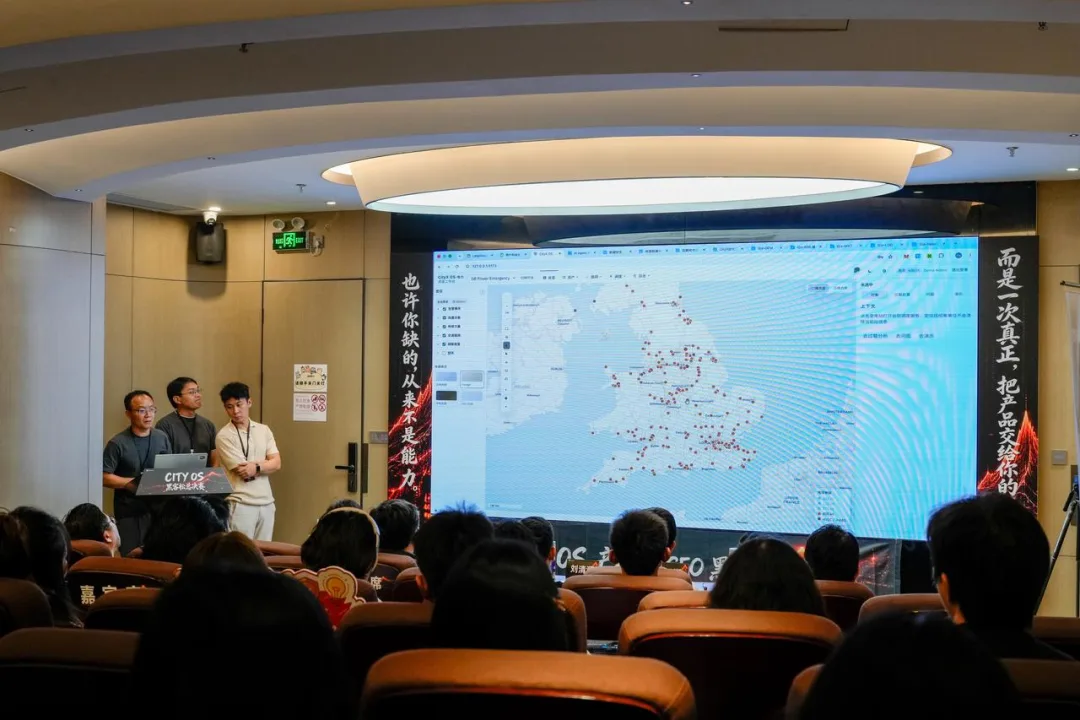
One approach simulates future urban states; the other develops real action chains. Both move urban AI beyond visualization toward sensing, understanding, prediction, simulation, decision-making and execution.
A Product CEO’s real test is judgment under constraints
‘Building products is always like dancing in shackles.’ During the defense, nine judges repeatedly brought the discussion from technical architecture back to reality.
Judge and AHS CTO Guo Lin reminded participants that technical capability must be tested and accumulated through real problems. Where core data is incomplete, historical information, related data and existing experience can progressively fill gaps in understanding, rather than waiting for a perfect dataset.
AHS product and R&D lead Liu Qingyuan stressed that product–market fit (PMF) and the minimum viable product (MVP) remain important in the AI era, perhaps more than ever. Large language models accelerate development, but tokens and time are still finite. AI should help establish stronger PMF and bring an MVP closer to a product that can actually launch.
In the spirit of the hackathon, a Product CEO is not the person who knows the most. It is someone who knows what matters and what to do first despite constraints in data, time, resources and markets, and keeps turning an idea into something usable.
This distinguishes the CITY OS Product CEO Hackathon from ordinary product showcases. It seeks people who can define problems, organize teams, build products quickly and take responsibility for results, rather than merely produce a complete presentation or a running model.
The finalists’ products will not stop at the awards ceremony. Teams can voluntarily join a further 30-day development program to move beyond current milestones and test and iterate in real scenarios.
For teams showing further deployment potential, AHS will also offer opportunities involving city pilots, investment consideration and project cooperation.
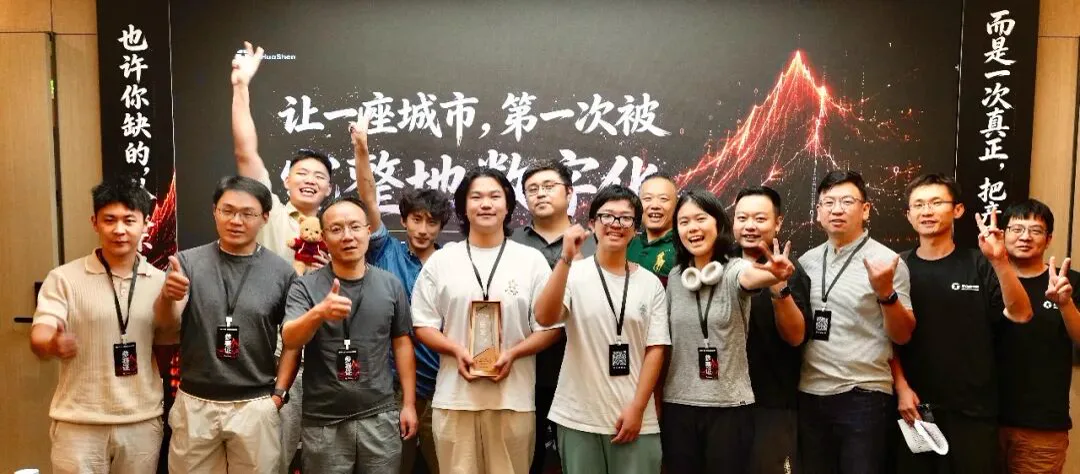
Guangzhou is only the first stop. The CITY OS Product CEO Hackathon will visit more cities, where new data, industrial structures, infrastructure and governance needs will pose further real-world tests for products.
This aligns with AHS’s work on CITY OS and the World Behavior Model (WBM): AI should understand how the present works, simulate the consequences of different decisions and continuously recalibrate through real-world execution and feedback.