Diagnosis cannot wait
Leakage losses continue for every day an abnormal pattern remains unconfirmed.
Contract water conservation / University operations
A leading energy services company is building a repeatable operating model for water conservation across university campuses.
Together with AHS, the company connects operational data, expert judgment, and field execution to diagnose anomalies faster and verify every intervention.
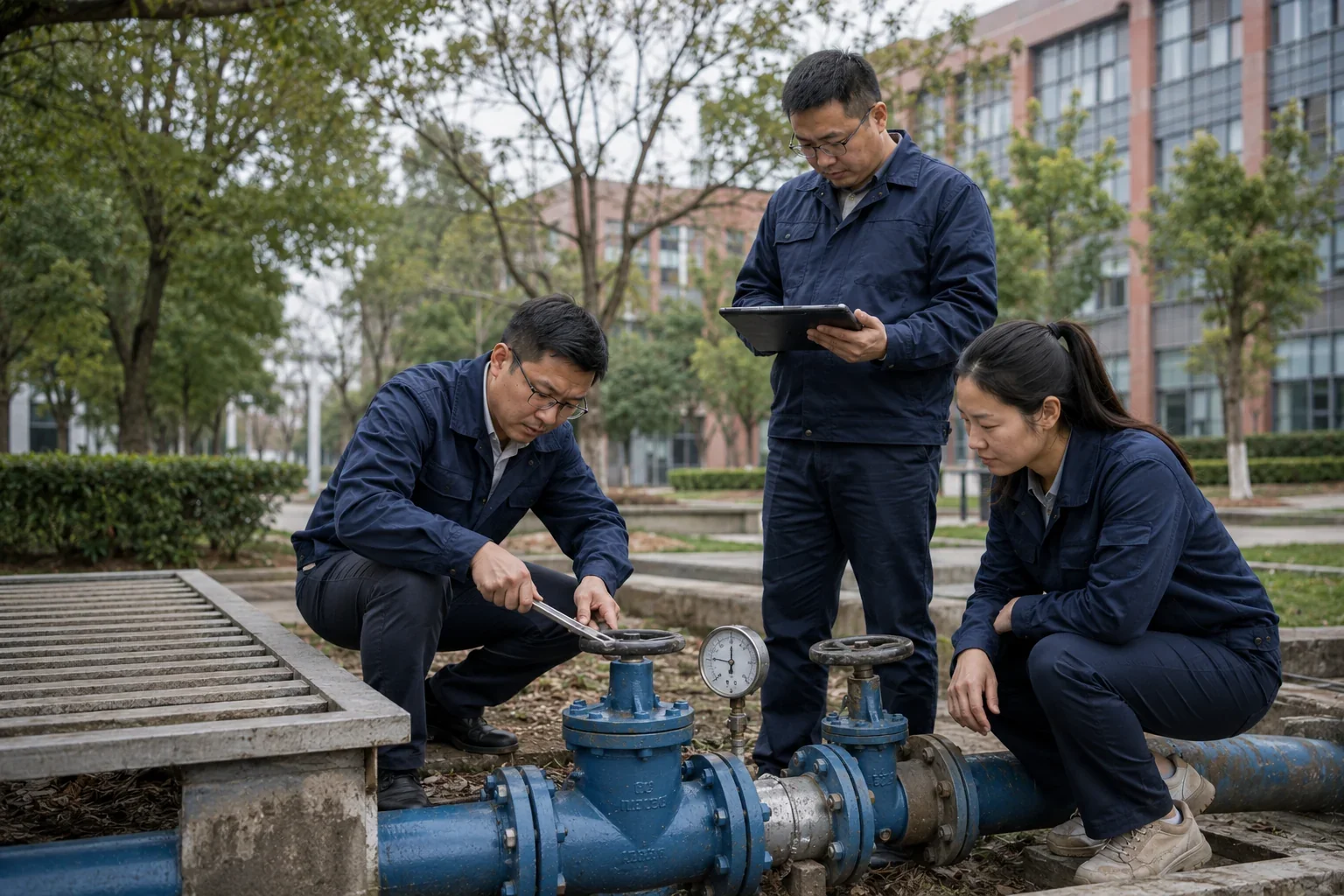
The operating context
Contract water conservation turns operational discipline into commercial return.
The company operates seven contract-based water conservation projects across university campuses. Demand shifts with dormitory occupancy, laboratory activity, landscaping, holidays, and weather. Fire protection systems and equipment conditions add further complexity, so a change in a meter curve may indicate a genuine leak, a device fault, or normal behavior.
Because commercial returns depend on verified savings, teams must determine what happened, prioritize the response, coordinate field work, and confirm that each intervention delivered a measurable result. Teams must trace each result back to its project, asset, decision, and completed field work.
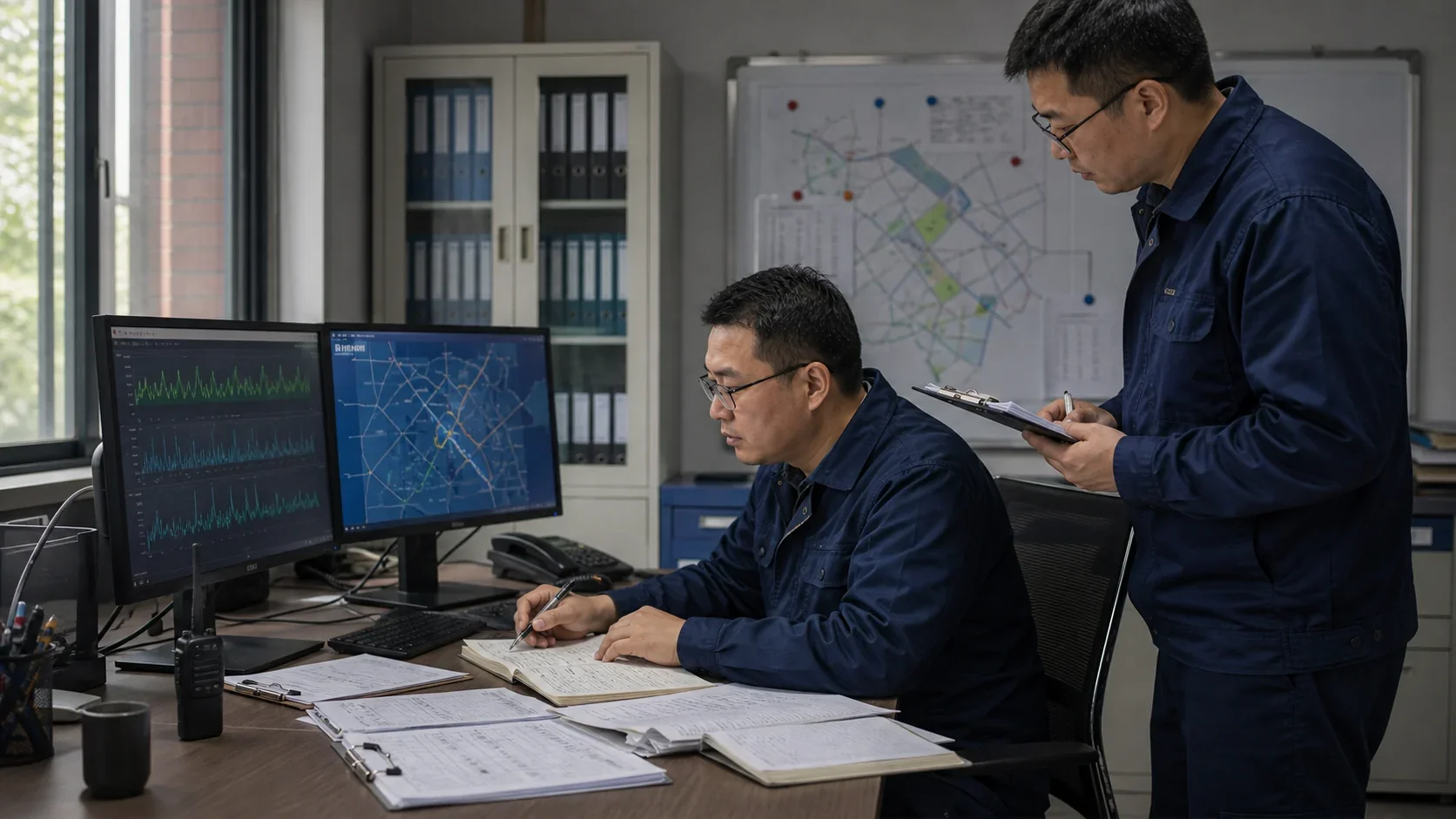
As the portfolio expanded, the same small specialist team remained responsible for critical diagnosis.
Assessing an alert meant reconstructing context from meters, pipelines, sensors, work orders, weather records, and site knowledge. The methods relied heavily on personal expertise and were difficult to standardize or share across projects.
Slower diagnosis, dispatch, repair, or verification allowed preventable water losses to continue. Each new campus increased the workload, while much of the judgment behind successful interventions remained locked inside individual experience.
Leakage losses continue for every day an abnormal pattern remains unconfirmed.
Cases from one campus need to improve decisions at the next.
The company and AHS created an AI Water-Saving Intelligence Brain that connects operational context with governed field action.
A unified intelligence foundation organizes water meters, zones, buildings, pipelines, equipment, alerts, work orders, weather, and academic calendars. A shared business model links these sources to schools, locations, assets, events, and accountability, so every anomaly can be interpreted within its real operating environment.
Specialized AI capabilities identify likely causes, assess urgency and impact, and prepare recommended actions with supporting evidence. Water specialists make the final decision and remain responsible for field action. Approved outcomes become reusable cases, giving teams and AI a consistent operating model across the portfolio while preserving clear responsibility. The model captures how specialists relate meter patterns to campus conditions, then carries an approved decision into a traceable work order and verified outcome. This shared method expands diagnostic capacity without requiring the specialist team to grow at the same rate.
Meter and sensor signals are read alongside campus zones, assets, work orders, weather, and academic calendars.
Bring the alert into its campus, asset, weather, and operating context.
Compare curves and prior cases, then prepare a likely cause and supporting evidence.
A water specialist reviews the diagnosis and approves the response.
The approved action becomes a work order for on-site handling.
Before-and-after flow confirms the outcome and records the case.
The alert, evidence, decision, work performed, and verified result return to the shared knowledge base.
Inside the operating system
Select a capability to see how knowledge, field execution, and portfolio learning connect.
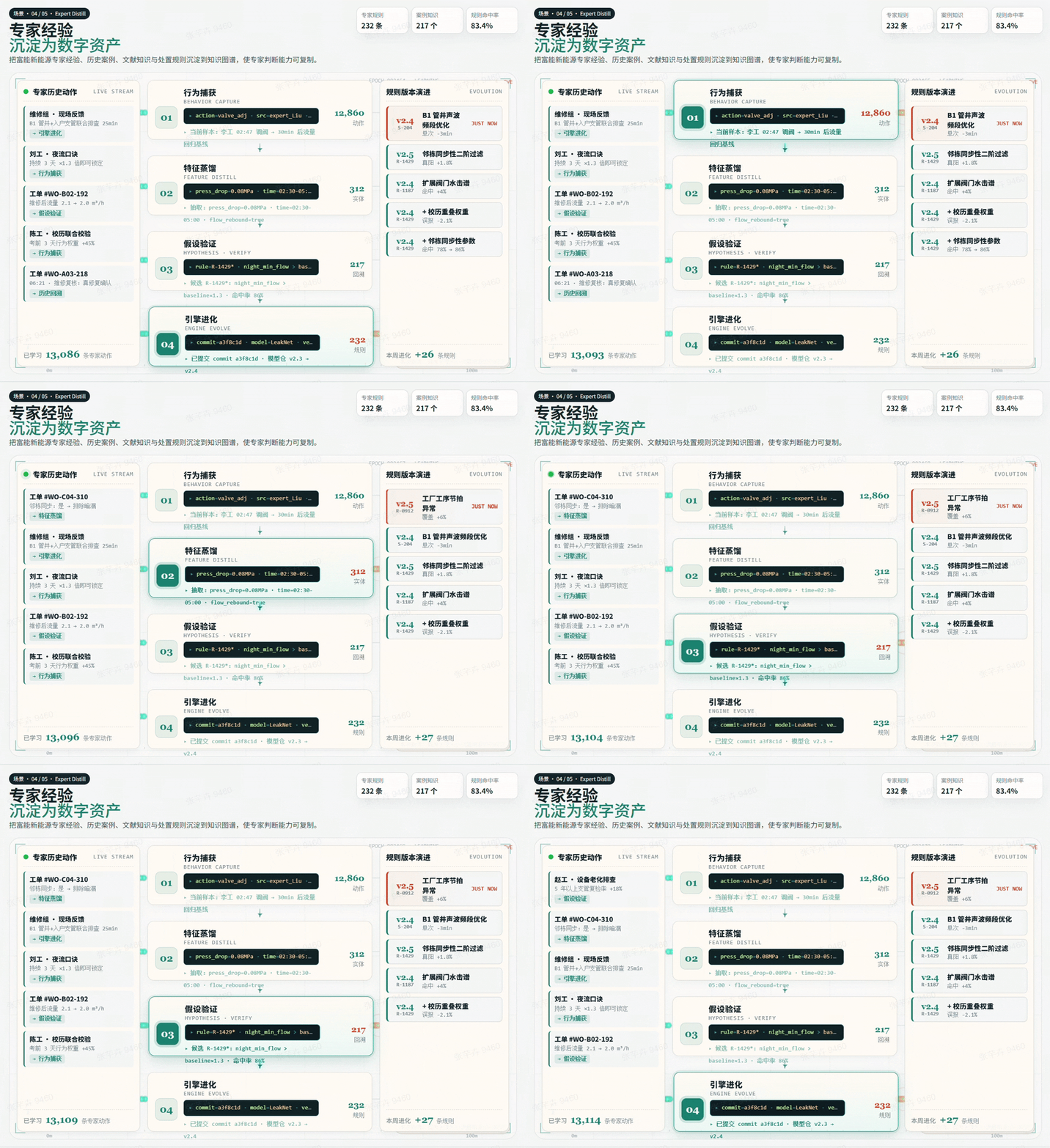
Capture expert actions, distill diagnostic features, validate patterns against prior cases, and evolve approved rules.
A governed decision loop
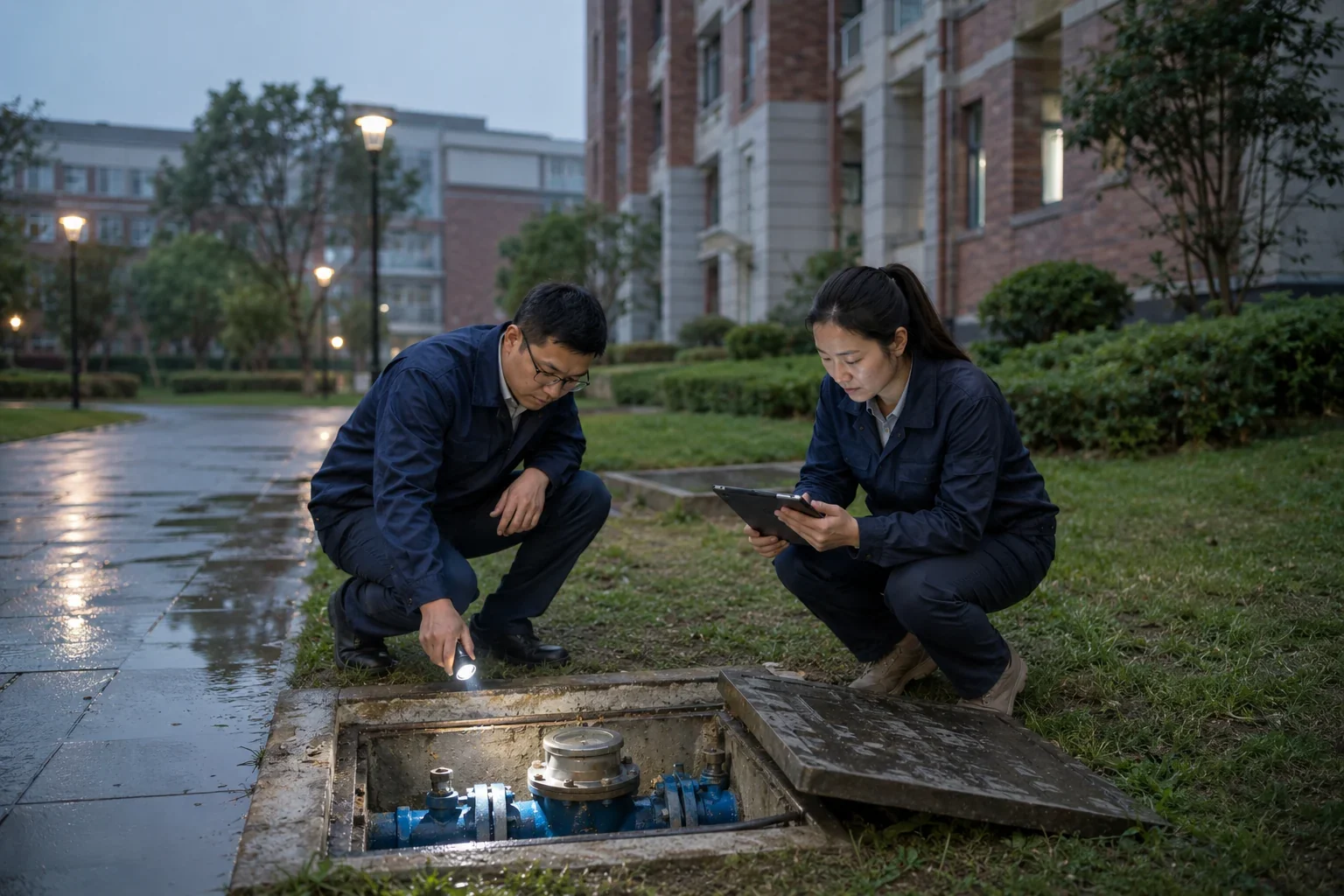
A campus meter registers an abnormal rise in minimum nighttime flow.
The system checks whether dormitory occupancy, the academic calendar, weather, or equipment status can explain the change. It compares the pattern with historical curves and similar cases to distinguish likely leakage from normal behavior or a faulty meter. The affected zone, urgency, likely impact, recommended response, and supporting evidence are assembled for review.
A water specialist approves the diagnosis before a work order reaches the field team. After repair, the system compares flow before and after the intervention, verifies the savings outcome, and records the case for use at other campuses. Human judgment stays inside the loop while each completed case makes the next assessment faster. The record retains the alert, evidence, approval, work performed, and resulting change in flow for audit and reuse.
Measured impact
Faster diagnosis and reusable case knowledge improve project economics while making the operating model easier to scale.
$88k
$617k
Days→Minutes
20-35%→45-60%
Specialists stay in control.AI prepares the diagnosis, recommendation, and evidence. People approve action and remain accountable.
Every project improves the next.More cases strengthen the shared knowledge base and extend expert capacity across the portfolio.
AHS / Water Conservation
Water services / Bio-process control
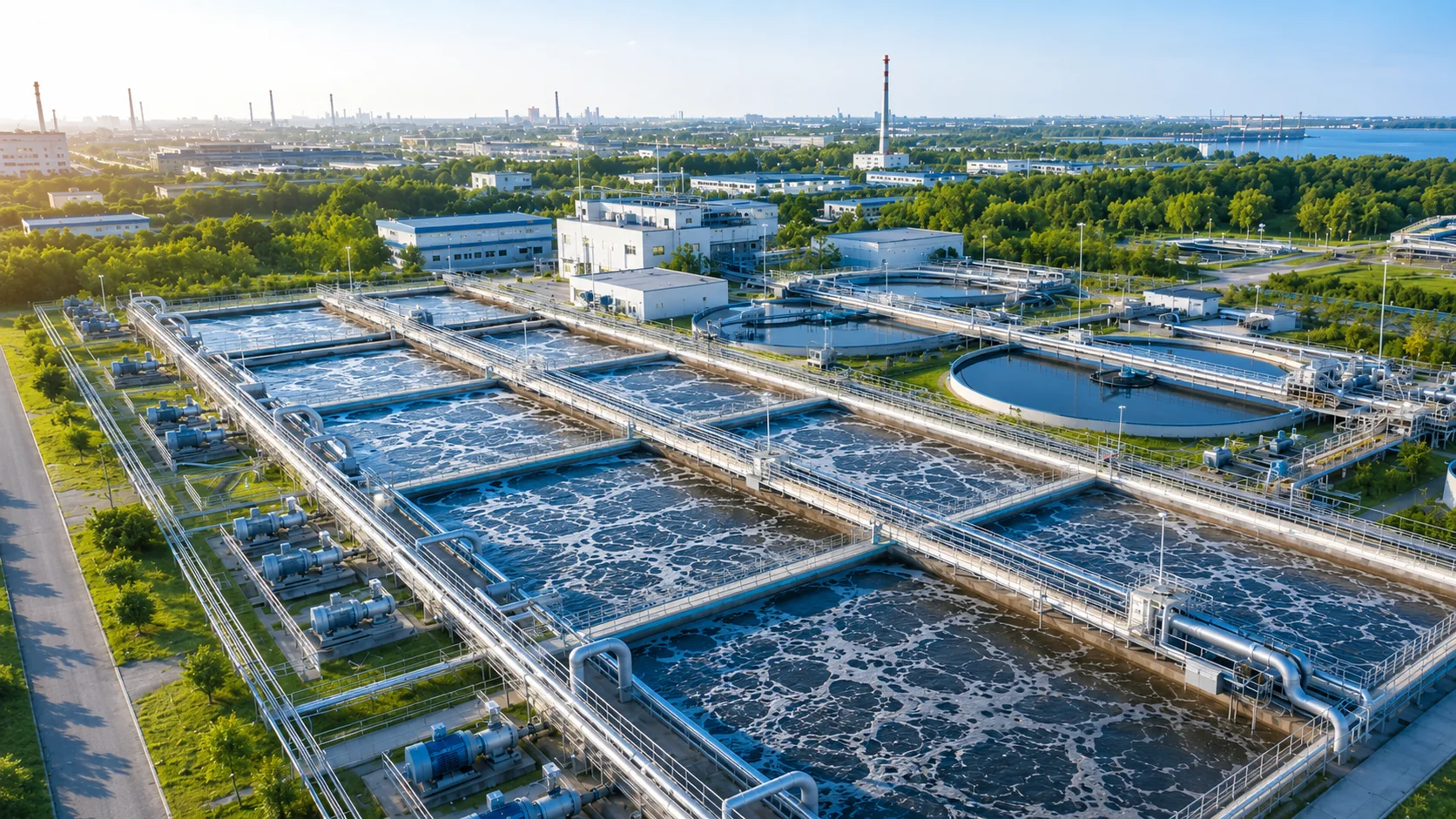
A leading national water services group is extending its automation foundation with connected decision intelligence for biological treatment.
Together with AHS, treatment teams can anticipate process changes, compare strategies, and act within clearly governed operating boundaries.
The operating context
Biological treatment is one of the most dynamic parts of wastewater operations.
Teams must balance changing influent conditions with aeration, sludge return, energy use, equipment loading, and discharge requirements.
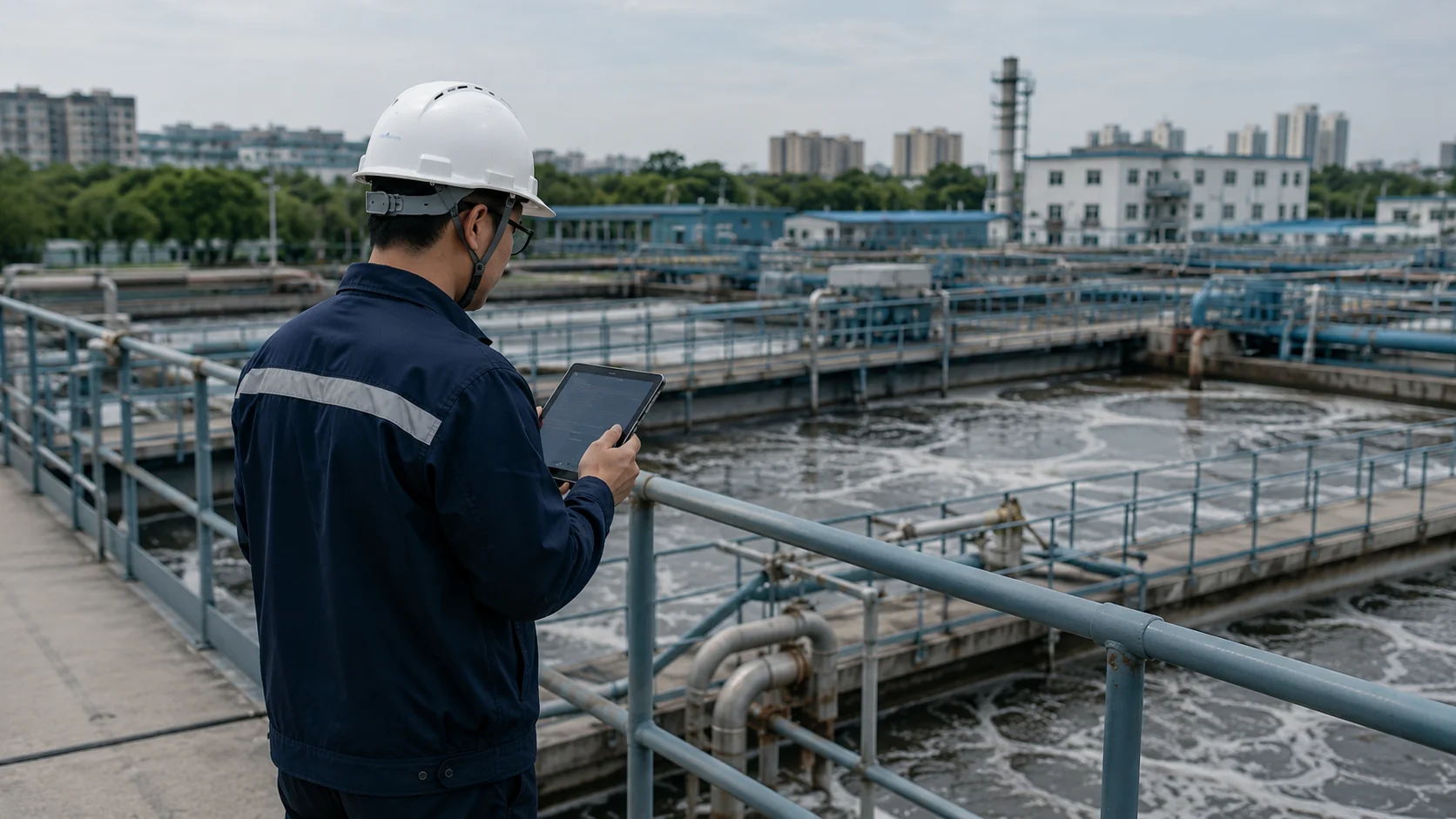
The group already has mature PLC, SCADA, and DCS automation with full business-system coverage. Yet converting continuous process signals, laboratory results, equipment status, and operating records into control decisions still depends heavily on experienced operators.
Influent, dissolved oxygen, ammonia, nitrate, equipment loading, and effluent risk influence one another over time.
Operators connect live signals with laboratory results, equipment constraints, and plant experience across separate systems.
AHS provides the intelligence and execution layer above the existing automation environment.
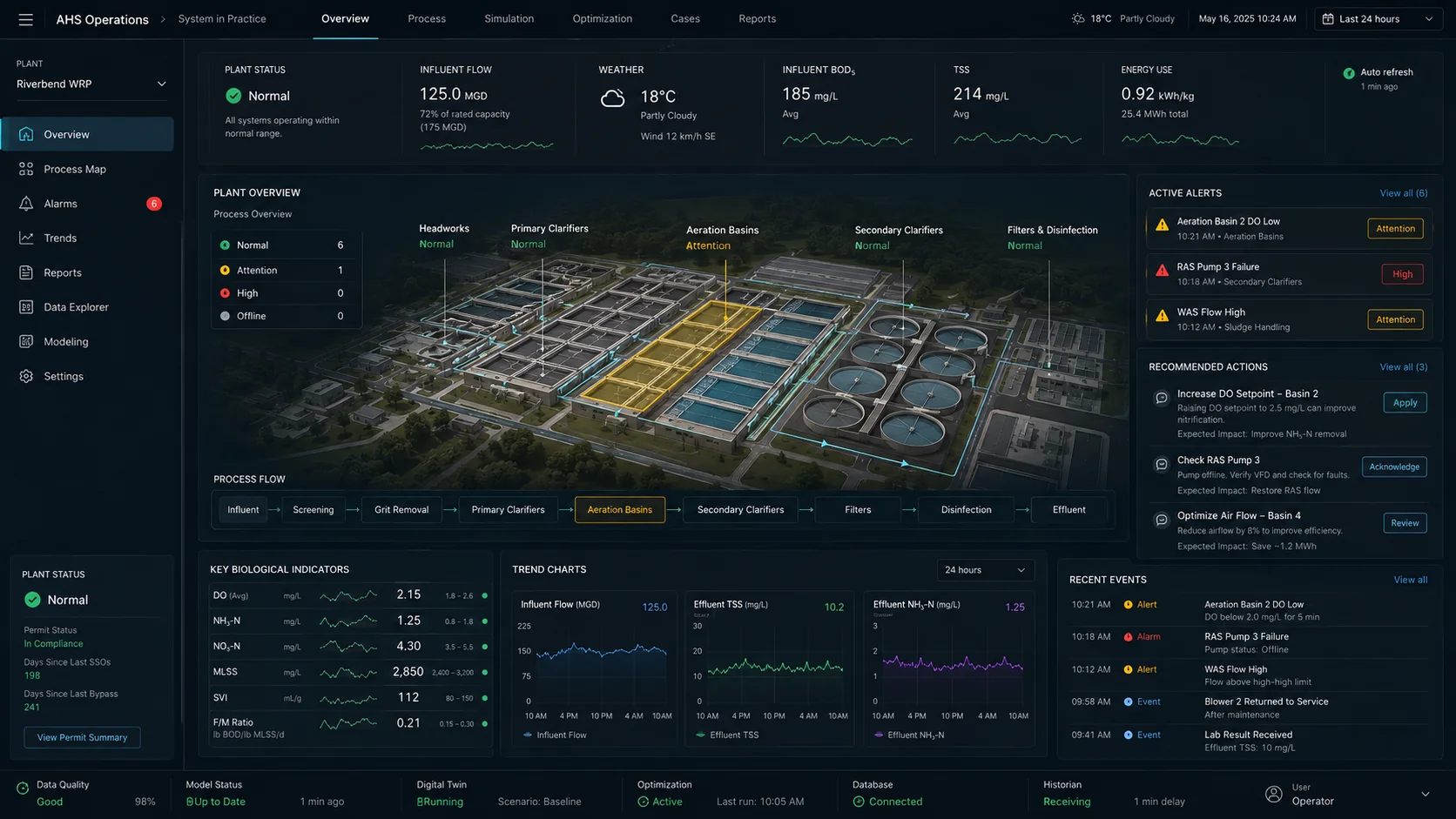
A 4D spatiotemporal digital twin links water quality, equipment behaviour, control actions, and operating objectives in a continuously updated process representation.
Teams can see current state and recent trajectory, then assess likely conditions and setpoint effects over the next 10, 30, or 60 minutes.
System in practice
The process twin connects diagnosis, simulation, recommendation, execution, and audit around a shared representation of the plant.
Governed execution

Predictive models show how the situation is likely to develop. Constrained optimization then compares control strategies before action is taken.
Each option is evaluated against effluent compliance, aeration energy, equipment protection, and process stability. A specialized AI Agent Workforce supports situation analysis, simulation, recommendation generation, safety review, and operational reporting.
Execution progresses from advisory review and operator confirmation to whitelist-based action and bounded automatic optimization.
Every approved intervention and outcome is retained for model recalibration and expert-reviewed rule updates.
Operational impact
Teams can anticipate changes in key biological indicators up to 60 minutes ahead and compare strategies before intervening.
A shared operating context makes expert analysis faster to reproduce while keeping people, safety controls, and traceability inside the execution loop.
60 min
85-92%
45-90 min→~10 min
Several days→<2 h
8-15%
Continuous learningApproved interventions feed model recalibration and expert-reviewed rule updates.
One shared contextTeams can compare evidence and strategies across plants with less specialist coordination.
AHS x Water Services