AHS Data OS and Ontology establish a unified operational model that represents the key elements of urban services and the relationships between them.
Urban services / Intelligent operations
Powering intelligent urban operations at enterprise scale.
A major urban services enterprise is building a new model for urban service management by connecting operational intelligence and frontline execution.
Together with AHS Agentrix, the enterprise is creating real-time operational intelligence that enables better decisions across large-scale urban services.
100+Cities
50k+Field workers
200kDaily work orders
The operating context
Enabling Intelligent Urban Operations at Scale
Coordinating services at this scale requires continuous alignment across frontline teams, vehicles, equipment, service locations, and changing field conditions.
Previously, fragmented operational information could require managers to search as many as six systems to understand and respond to a single issue.
The enterprise sought to create a unified operational view that could connect field information, operational context, and decision-making across its service network.

Creating a Connected Intelligence Layer for Urban Services
The enterprise’s operations involve continuous coordination across service locations, frontline teams, vehicles, equipment, and operational events.
By connecting operational data with business context, the model creates a consistent understanding of how service locations, frontline teams, vehicles, equipment, operational requirements, and available actions interact.
System in practice
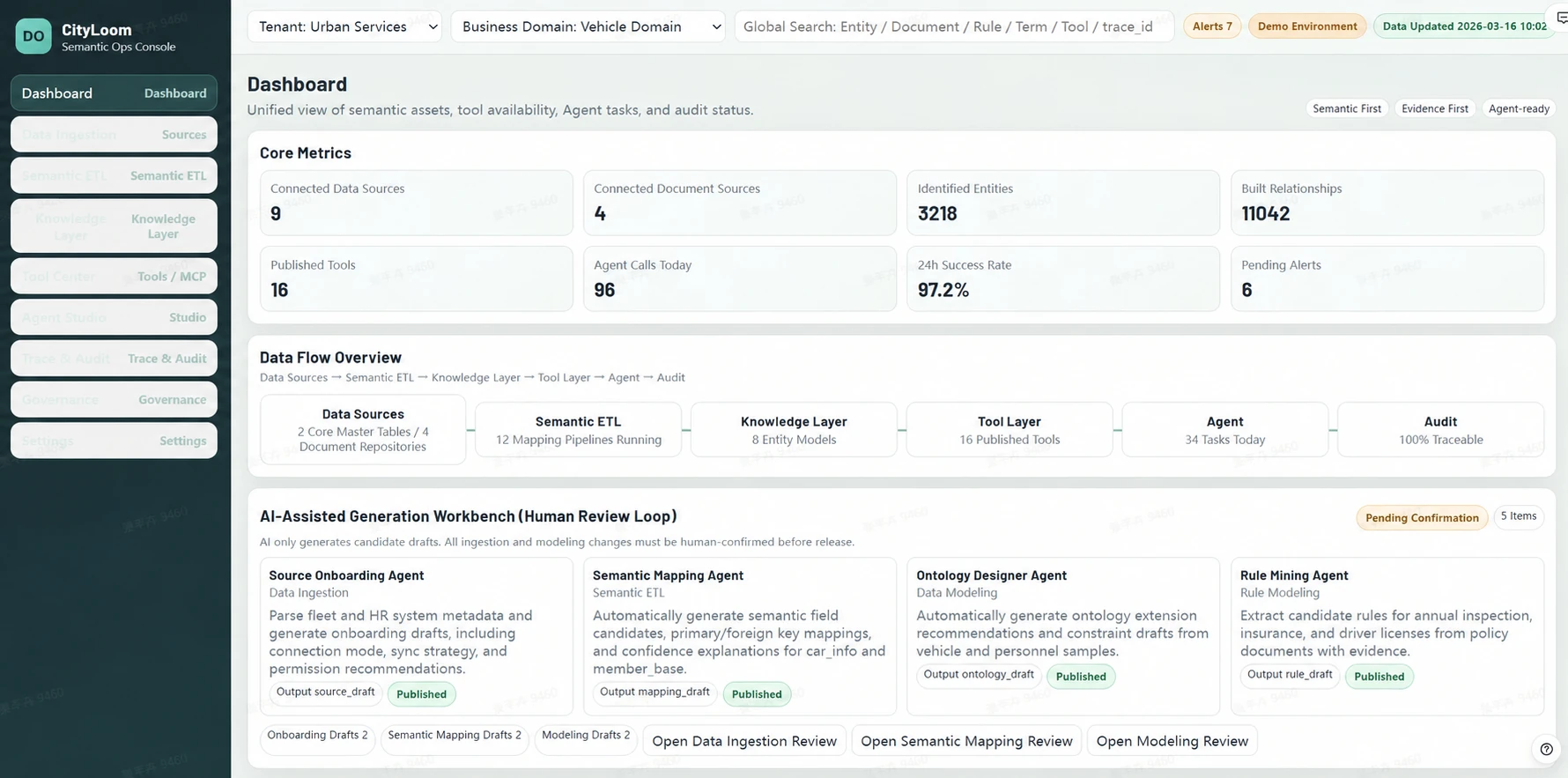
One console.
From visibility to action.
Urban services / Cockpit
AI-enabled workflow
Applying AI to Real-World Urban Operations
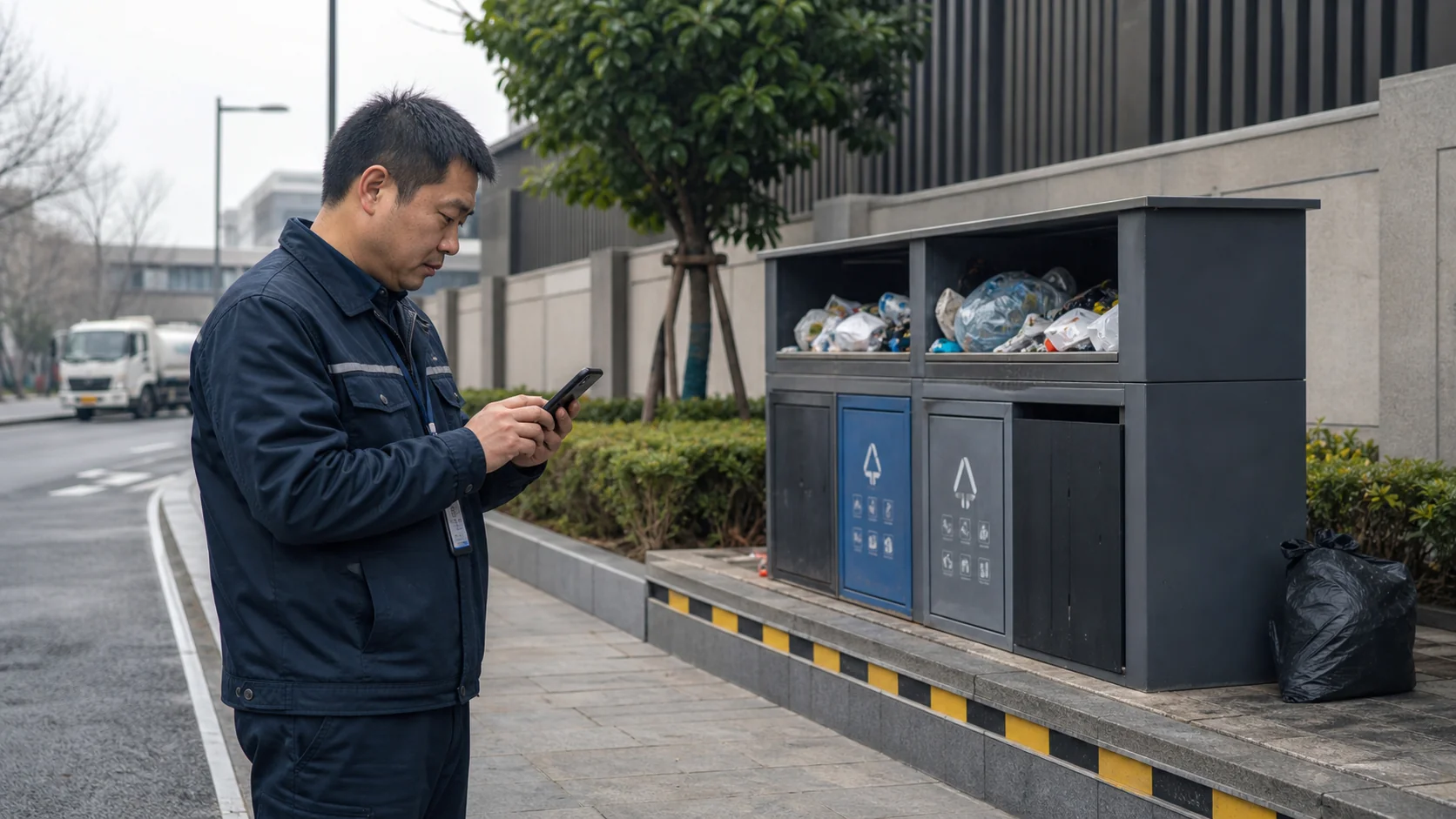
A mobile device identifies an overflowing waste collection point during a routine inspection.
AHS Agentrix connects observations from drones, mobile devices, and inspection cameras with the relevant service area, responsible team, and operational response.
The enterprise is building an AI workforce to support inspection, dispatch, coordination, and other critical activities alongside frontline teams.
Operational Impact
Increased Operational Visibility
By connecting field conditions, operational tasks, and responsible teams, the enterprise gains a more comprehensive view of urban service activities. Managers can better understand operational status, track issue resolution, and make more informed decisions across large-scale operations.
Proactive Urban Management
With real-time operational visibility, the enterprise’s teams can identify emerging issues earlier and coordinate resources proactively across distributed urban operations.
These improvements also reduced fuel expenditure from USD 28.2 million in H2 2025 to USD 26.0 million in H1 2026, a 7.9% reduction.
1 h→15 min
Event resolution time
10 min→1 sec
Dispatch time
70%→98%
Valid work orders generated by AI
85%→95%
On-time closure & verification pass rate
5.0 h→3.5 h
Daily outdoor exposure during extreme weather
72%→84%
Employee satisfaction
Urban operations in practice
One model.
Different environments.
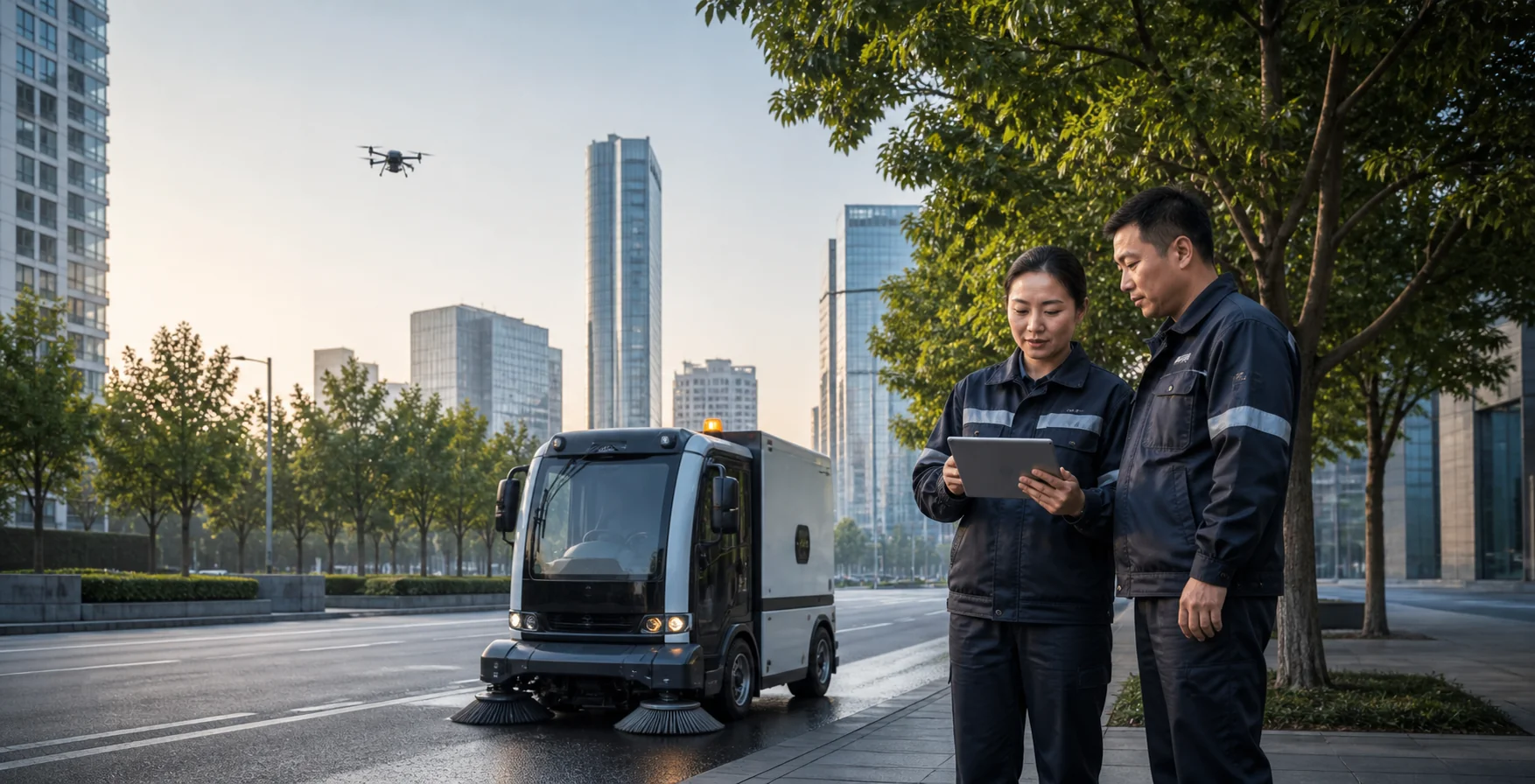
The operating model supports diverse environments, from autonomous cleaning fleets and waterway patrols to cross-departmental drone operations and service-centre management.
Daily coverage per autonomous unit, meeting a 98% dust-removal standard.
Waterway coverage, identifying 80% more issues than manual patrols.
Connected with 10 departmental applications, with data-refresh performance exceeding 98%.
Coverage of high-frequency services, improving efficiency by 60% while maintaining 98% citizen satisfaction.
>50% lower costAutonomous operations compared with manual approaches.
18% → 12%Empty-vehicle mileage.
Customer perspective
“The biggest change is not automation itself. It is having a clearer understanding of what is happening across our operations and being able to respond faster.”