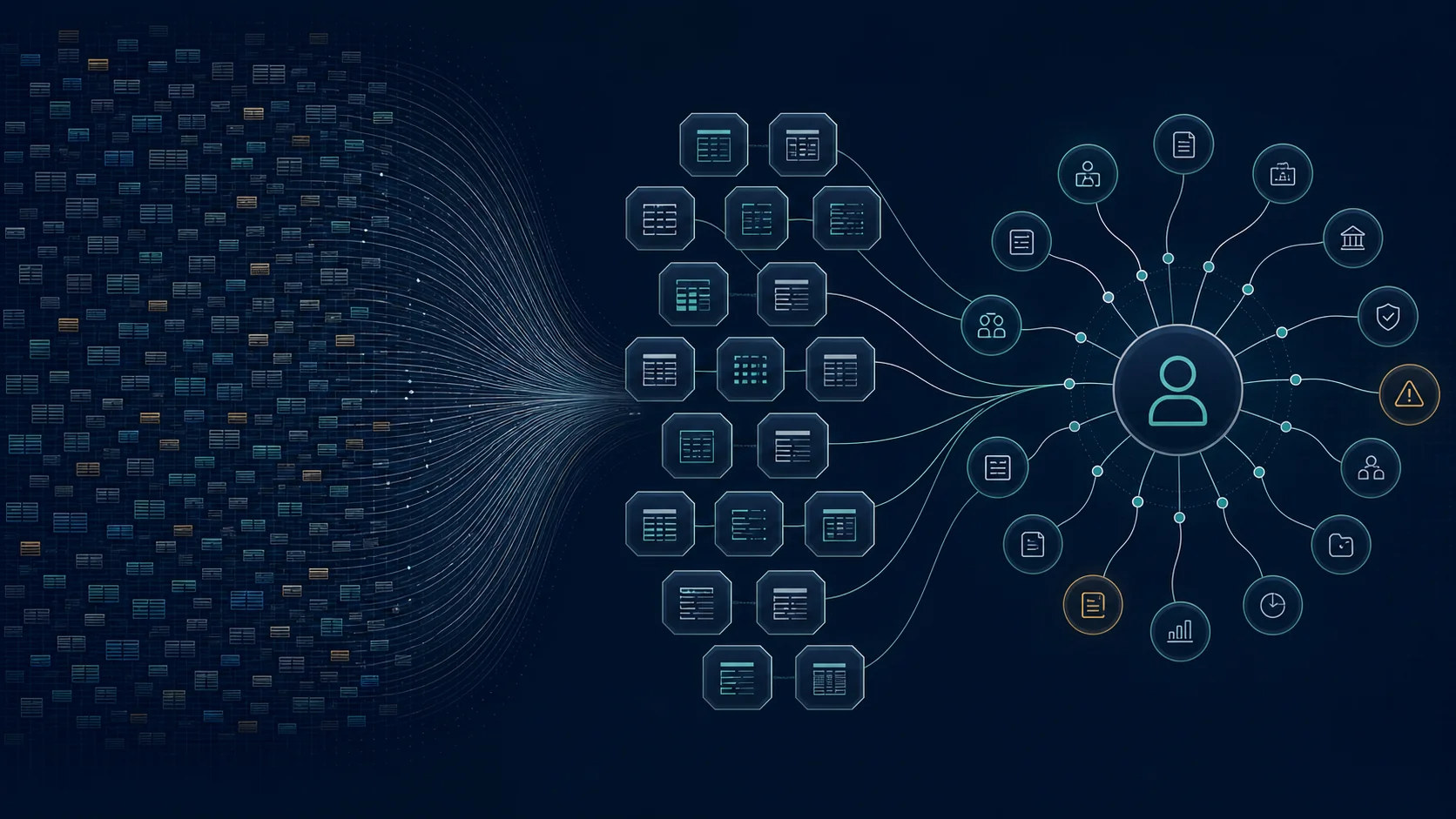
AHS DataOS turns more than 600 source tables into 17 entity types connected through 18 defined relationships.
Enterprise Operations Decision Support / Workforce & Payroll
Starting with workforce and payroll management, connect employees, organizations, business rules, and source evidence to support traceable, accountable enterprise decisions.
Customer context
Across multiple provinces and entities, a large energy enterprise manages nearly 300,000 employees.

It maintains three interconnected career pathways for managers, professional and technical staff, and skilled employees. Its compensation framework combines 23 job grades with 9 salary steps. Workforce management spans organization, employee, position, education, attendance, and performance systems.
Compensation adds employee profiles, pay plans, adjustment events, reward and disciplinary records, calculation rules, and payroll results.
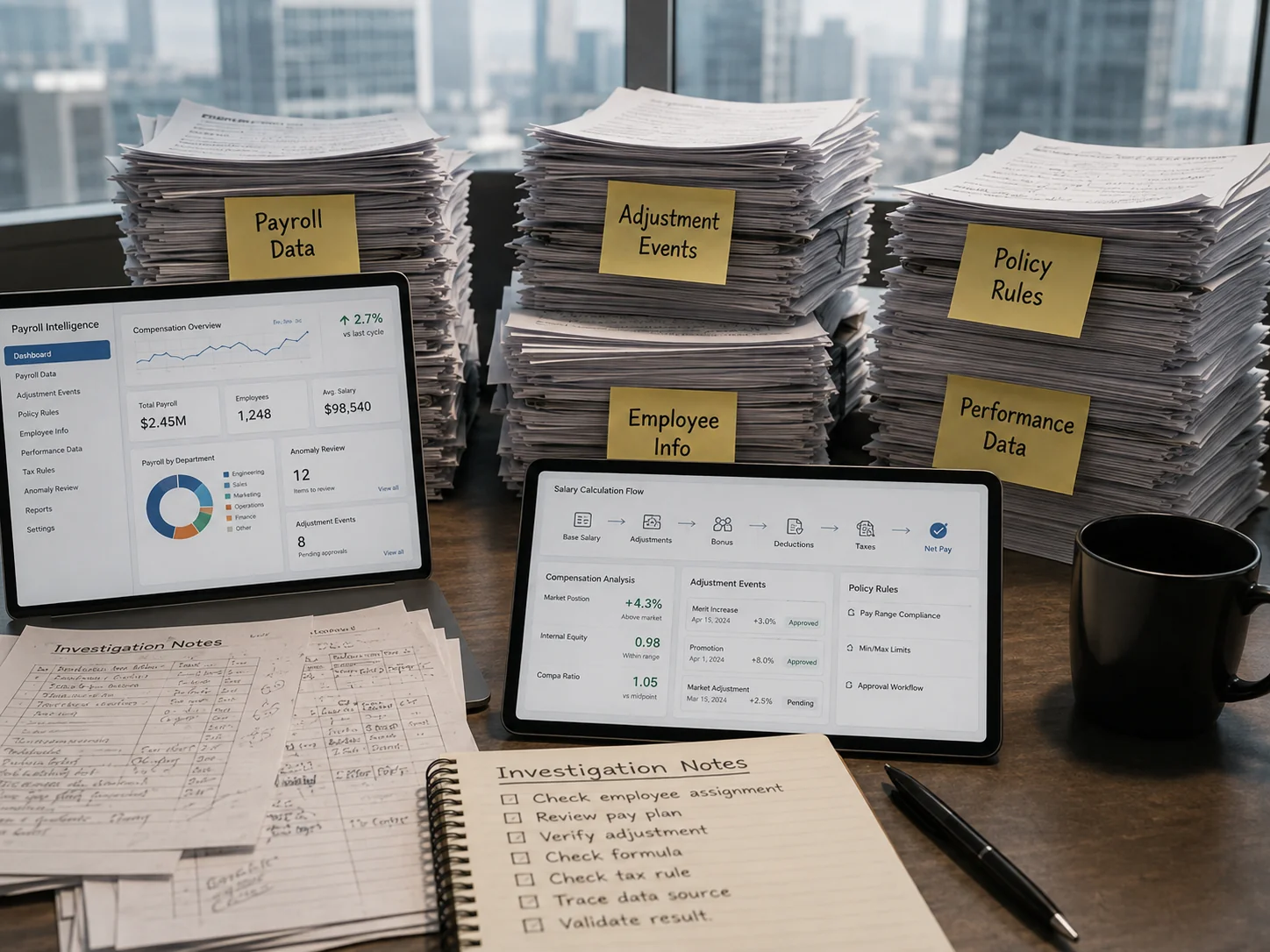
Understanding one outcome requires managers to move from the organization to the employee, then to the relevant position, performance history, compensation events, and risk factors. Every domain can contribute to the same final payroll figure.
One payroll result may depend on
Business challenge

HR and finance teams could see final payroll figures, but diagnosing an unusual result meant reconstructing the calculation across spreadsheets, systems, and policy rules.
The same employee could appear under different identifiers in separate modules. Pay events, formulas, tax rules, and source rows could not be reviewed together, making compliance risks, salary inversion, and unexpected changes harder to assess.
An answer was useful only if the team could verify how it had been reached. Audit teams needed to determine whether an issue originated in employee assignment, policy interpretation, or data integration, and when evidence was missing, reviewers needed to know exactly which source was missing before the team could reach a conclusion.
The enterprise created an employee-centered operating model for workforce and compensation management. Its HR Ontology connects each employee to the relevant organization, position, capabilities, performance record, and sequence of employment events. The compensation model extends those relationships to pay plans, adjustment events, payroll batches, calculation formulas, and policy rules.
Starting object
Managers can start with a person and follow the connected organization, position, performance history, compensation events, and relevant risk factors.
AHS DataOS turns more than 600 source tables into 17 entity types connected through 18 defined relationships.
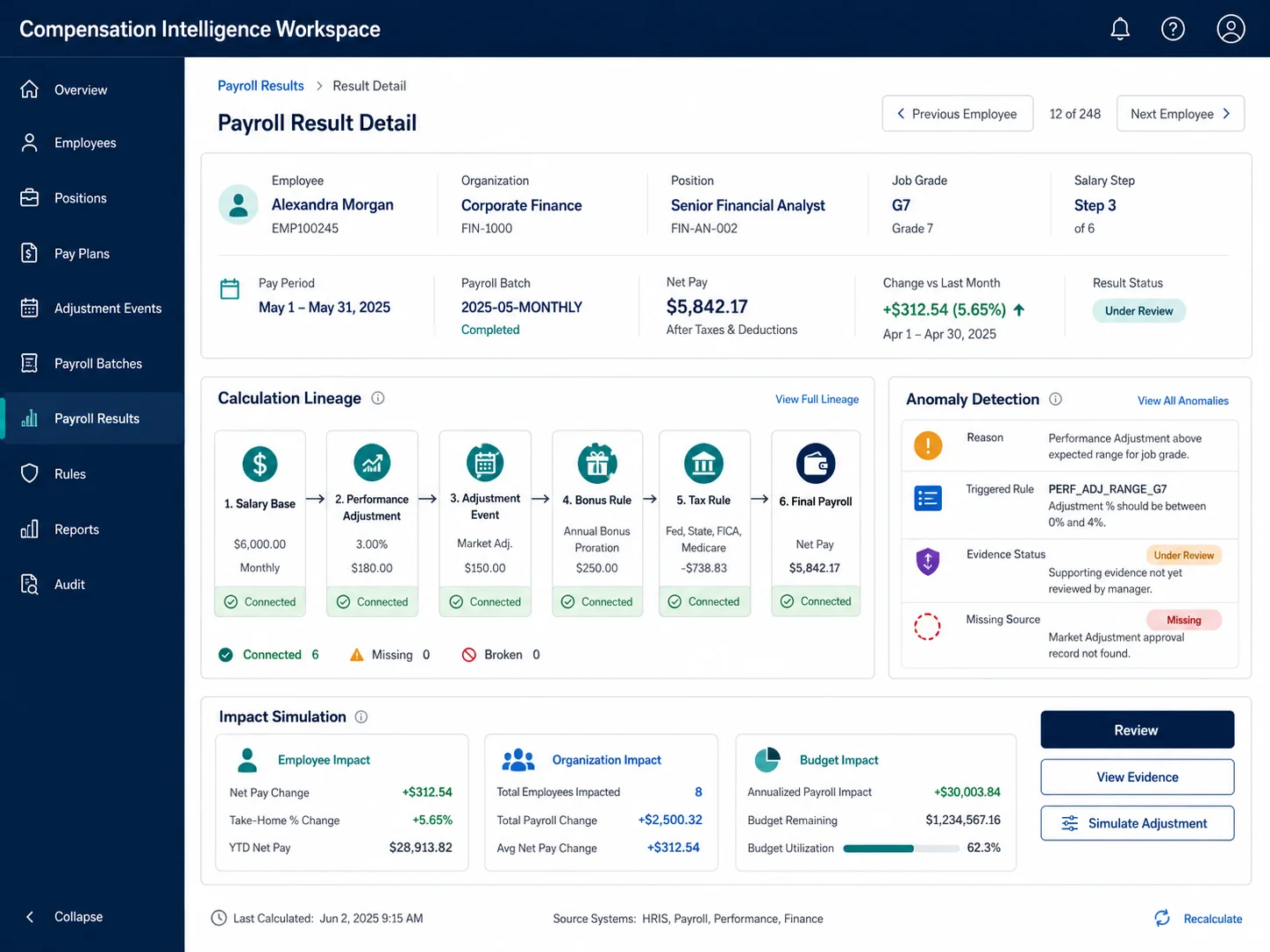
Managers can begin an investigation from an organization, an employee, or a payroll event, then follow the connected logic back to the relevant record. Complete paths remain visible, while missing inputs are marked as blocked, preserving uncertainty instead of obscuring it.
System in practice
Connected paths remain visible. Missing inputs are shown as blocked, so the workspace never completes an unsupported conclusion.
AI-enabled workflow
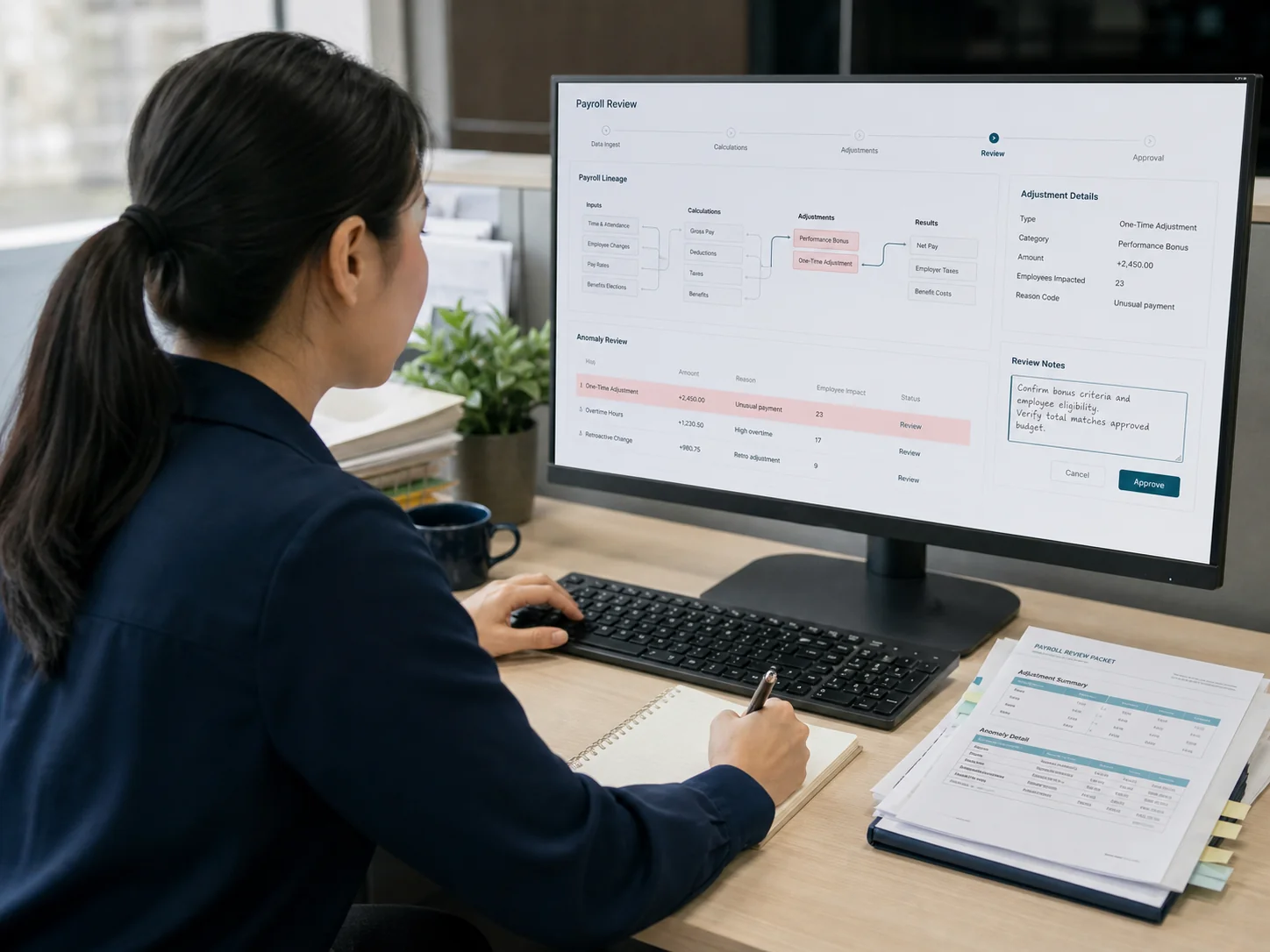
A manager opens an unexpected payroll change and follows three steps before deciding what to do.
Compare the employee, pay plan, adjustment history, and applicable rule.
Follow the payroll batch through payment detail, formula, tax rule, and original source row.
Assess the effect on the employee, organization, and budget before approval.
Validated anomalies become Payroll Exception instances linked to relevant business objects and trigger review. Missing evidence is shown, not inferred.
Operational impact
Managers can navigate between organizations, employees, positions, performance history, compensation events, and relevant risk factors.
Every connected result can be followed through pay batches, formulas, tax rules, and original source rows.
The system validates rule events, flags suspected issues, and identifies missing evidence instead of completing unsupported conclusions.
HR, finance, and audit teams can distinguish issues caused by employee assignment, business rules, or data integration.